
Leg extensions are a popular exercise among fitness enthusiasts for strengthening the quadriceps, the large muscles at the front of your thighs. However, whether due to injury, discomfort, or simply a desire for variety, you may find yourself searching for leg extension alternatives. Fortunately, there are plenty of effective exercises that work similar muscle groups while minimizing stress on the joints. In this article, we explore some excellent alternatives to leg extensions that can help you achieve stronger, healthier legs.
Why Consider Alternatives to Leg Extensions?
While leg extensions offer the benefit of targeting the quadriceps, they can place a significant strain on the knee joint, particularly if performed with heavy weights or improper form. Additionally, leg extensions isolate the quadriceps but do not engage other muscle groups. Incorporating a variety of exercises encourages balanced development of the legs and helps prevent overuse injuries. Furthermore, working with compound movements can improve overall functional strength and joint stability.
1. Squats: A Foundation of Leg Strength
Squats are a functional exercise that targets not just the quadriceps but also the hamstrings, glutes, and calves. They mimic everyday movements like sitting and standing, making them beneficial for overall leg strength and mobility.
- Basic Squats: Stand with your feet shoulder-width apart, lower your body by bending your knees, keeping your back straight, and return to standing.
- Variations: You can try goblet squats, sumo squats, or jump squats to keep your routine exciting and challenging.
Incorporating squats into your workout routine can enhance muscle coordination and improve balance. For guidance on proper squat technique, check out resources from the NIH.
2. Lunges: Balanced Lower Body Strength
Lunges are another excellent alternative that helps to build strength and stability in your legs. They work multiple muscle groups, including the quadriceps, hamstrings, and glutes, while also engaging your core.
- Forward Lunges: Step forward with one leg, lowering your hips until both knees are at about a 90-degree angle. Alternate legs.
- Reverse Lunges: Step backward rather than forward, which can be easier on the knees.
- Lateral Lunges: Step out to the side to target different parts of your legs.
Focus on maintaining proper form, as lunges can lead to injury if done incorrectly. Resources like the Mayo Clinic provide insights into maximizing the effectiveness of lunges.
3. Step-Ups: Functional Leg Strength
Step-ups are a straightforward yet effective exercise that mimics everyday activities, such as walking up stairs. This exercise targets the quadriceps and helps improve balance and coordination.
- How to do it: Use a sturdy exercise step or bench. Step up with one leg, pressing through your heel. Bring your other leg up to meet it, then step back down.
- Variations: Use weights or increase the height of the step to enhance the challenge.
Step-ups can also help with lower body stability, making them ideal for athletic training. For more information on proper step-up form, consider visiting the Cleveland Clinic.
4. Deadlifts: Comprehensive Lower Body Strengthening
Deadlifts are primarily known for their ability to strengthen the posterior chain (the back of your body), including the glutes, hamstrings, and lower back. However, they also engage the quadriceps during the lift.
- How to do it: Stand with your feet hip-width apart, holding a barbell or dumbbells. Bend at your hips and knees, keeping your back straight, and lift the weights by extending your hips and knees.
- Variations: Try sumo deadlifts or Romanian deadlifts for slight variations in muscle engagement.
Deadlifts require attention to form and can be more challenging, especially for beginners. If you’re interested, several reputable sources, such as the World Health Organization, provide safety tips for lifting.
5. Resistance Band Exercises: Versatile and Accessible
Resistance bands are great for those looking to strengthen their legs without heavy weights or complicated equipment. They provide constant tension throughout the movement, which helps build strength effectively.
- Banded Squats: Place a resistance band around your thighs and perform squats as usual for additional resistance.
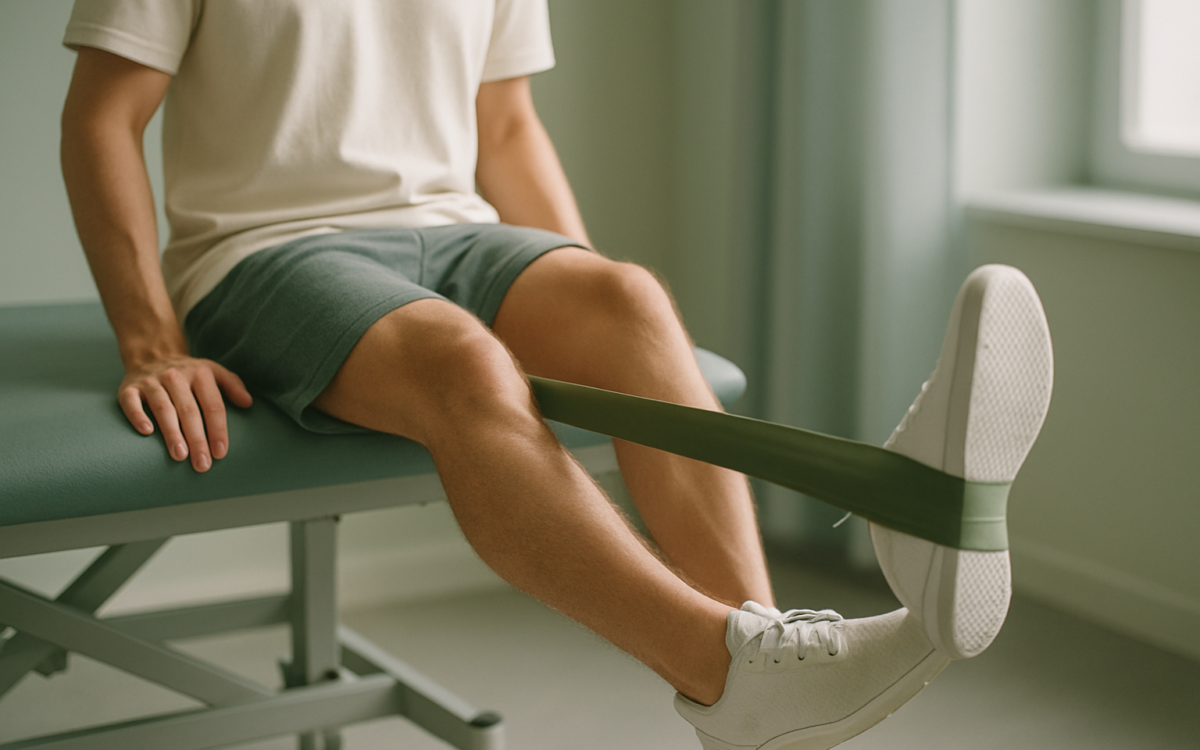
- Banded Leg Extensions: Attach one end of the band to a stable surface and loop the other around your ankle to mimic the leg extension motion without the joint stress.
These exercises are easily modified and can be done anywhere, making them perfect for home workouts or when traveling.
When to See a Doctor
If you experience persistent knee pain or discomfort while performing these exercises, it is advisable to consult with a healthcare professional. They can assess your joint health and recommend an appropriate workout plan tailored to your needs.
Additionally, if you have any underlying health conditions such as arthritis or prior injuries, talking to a doctor or physical therapist is essential before starting new exercises.
In conclusion, while leg extensions can be beneficial for building quadricep strength, numerous effective alternatives can provide comprehensive leg conditioning while prioritizing joint health. By incorporating exercises such as squats, lunges, step-ups, deadlifts, and resistance band workouts into your routine, you can achieve stronger legs without the drawbacks associated with leg extensions. Always listen to your body, maintain proper form, and consult a healthcare provider when needed for the best results in your fitness journey.
