
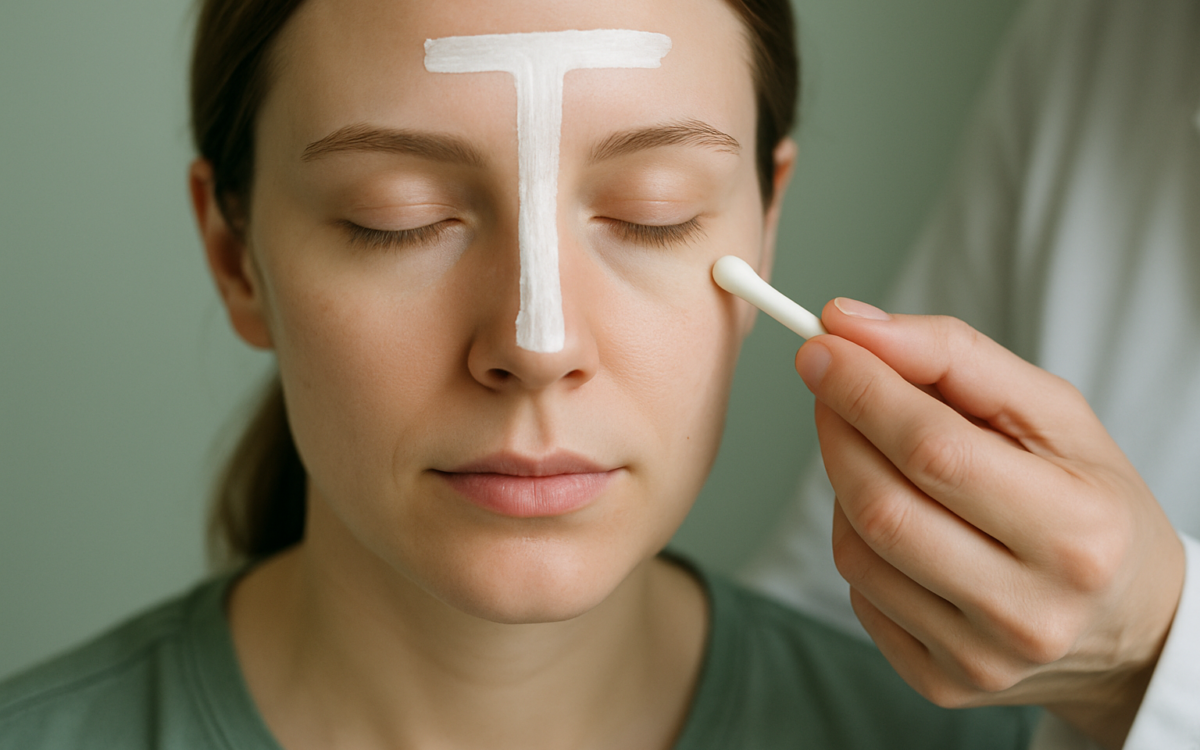
The T-zone is a term many people hear when discussing skin types, yet it remains a mystery for others. This area of the face, shaped like the letter ‘T,’ includes the forehead, nose, and chin. For many, the T-zone tends to be oilier and more prone to breakouts than other areas of the face. Understanding the T-zone is essential for anyone looking to improve their skincare routine and achieve a healthier complexion.
Understanding Your T-Zone
Your T-zone consists of several key facial features. The forehead forms the top of the ‘T,’ while the nose and chin create the downward strokes. People often notice that this area of their face produces excess oil, which can lead to a shiny appearance, clogged pores, and breakouts.
The skin in the T-zone has more sebaceous (oil) glands than other parts of the face. Because of this fact, those with combination skin tend to see oily T-zones while the rest of the face may be dry or normal. Understanding these differences is vital in managing your skin effectively.
Common Concerns in the T-Zone
The T-zone is often a hotspot for various skin issues, such as:
- Acne: Blocked pores can lead to the formation of pimples, blackheads, or cystic acne.
- Shiny Skin: Oily skin can lead to unwanted shine, particularly in photographs or under bright lights.
- Pore Size: Enlarged pores are often more visible in the T-zone due to excess oil production.
Each of these issues can be linked to your skin type and environmental factors like humidity and skin care products. Learning how to properly care for your T-zone can mitigate some of these concerns.
Skincare Tips for the T-Zone
Incorporating the right skincare routine can help maintain balance in your T-zone. Here are some steps to consider:
1. Cleansing
Start with a gentle cleanser that effectively removes excess oil without stripping your skin of its natural moisture. Look for ingredients like salicylic acid, which can help clear clogged pores, or glycolic acid for a gentle exfoliation. Cleanse your face twice a day, in the morning and evening, to keep your skin free of dirt and oil.
2. Exfoliation
Exfoliating 1-2 times a week can help remove dead skin cells and prevent clogged pores. Consider a chemical exfoliant containing alpha-hydroxy acids (AHAs) or beta-hydroxy acids (BHAs) to ensure a gentle yet effective treatment for your T-zone.
3. Moisturizing
Even if you have an oily T-zone, moisturizing is crucial. Choose a lightweight, oil-free moisturizer that hydrates without adding extra grease. Gel-based moisturizers are often a good choice, as they balance moisture without feeling heavy.
4. Targeted Treatments
If you struggle with acne in your T-zone, consider applying spot treatments with benzoyl peroxide or salicylic acid directly on blemishes. For enlarged pores, products containing niacinamide can help minimize the appearance. Always patch-test any new products to avoid adverse reactions.
Lifestyle Factors Affecting the T-Zone
In addition to your skincare routine, several lifestyle factors can impact the health of your T-zone. Here are a few to keep in mind:
1. Diet
Your diet plays a significant role in your skin’s health. Eating a balanced diet rich in fruits, vegetables, and whole grains can promote clearer, healthier skin. Hydration is also vital. Drink plenty of water to help flush out toxins and keep your skin hydrated from within.
2. Stress Management
Stress can exacerbate skin issues, including breakouts. Incorporating stress-reducing activities such as exercise, yoga, or mindfulness can positively affect your overall health and skin condition.
3. Sun Protection
Protecting your skin from harmful UV rays is essential, even for those with oily skin. Use a broad-spectrum sunscreen with an SPF of at least 30 daily, as sun damage can lead to premature aging and other skin issues.
When to See a Doctor
If you experience severe acne, persistent breakouts, or other concerning skin changes in your T-zone, consulting a dermatologist may be beneficial. Professionals can provide personalized advice and treatment options tailored to your specific needs. If you notice any unusual changes in your skin, such as new growths or rashes that do not improve with over-the-counter products, it’s wise to seek medical evaluation as well.
Conclusion
Maintaining the health of your T-zone doesn’t have to be a daunting task. With a solid understanding of your skin and effective skincare practices, you can enjoy a balanced complexion. Remember that everyone’s skin is unique—what works for one person may not work for another. Take the time to explore different routines and refrain from using too many products at once. Your T-zone will thank you!
