
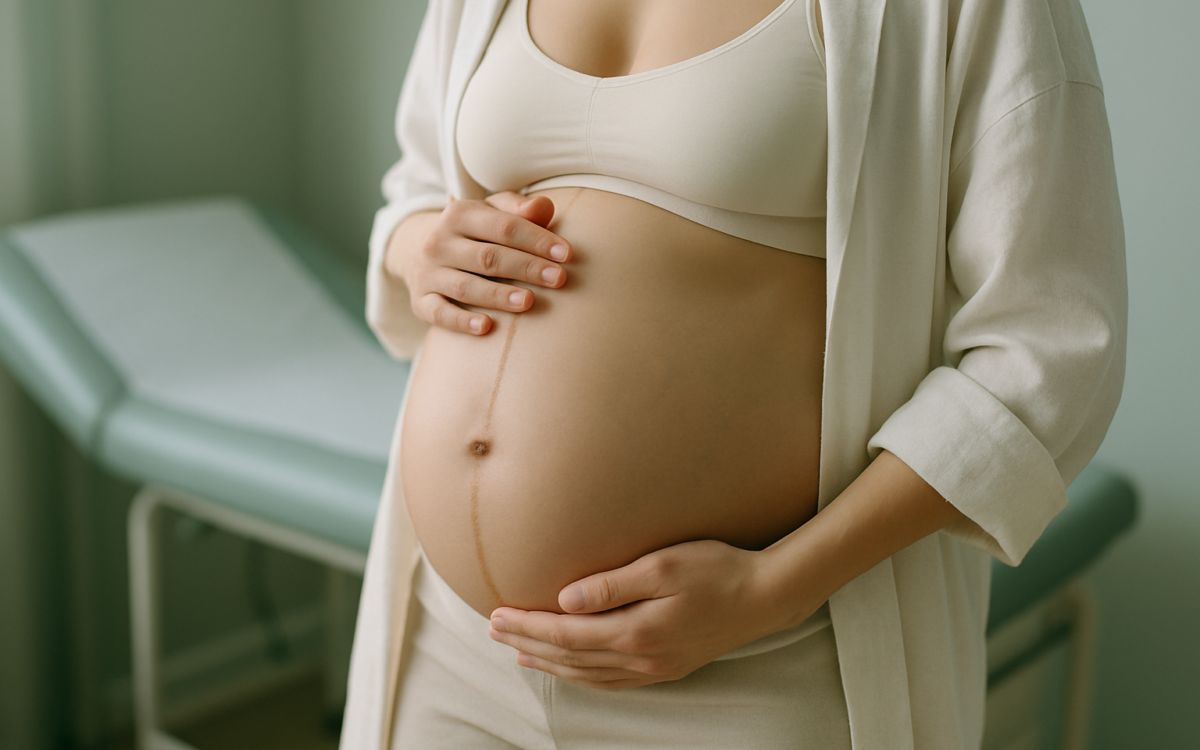
During pregnancy, many women experience a range of changes, both physically and emotionally. One noticeable change that often goes overlooked is a dark vertical line that appears on the abdomen. This line is known as linea nigra, and while it may cause concern for some, it is a typical sign of pregnancy.
What is linea nigra?
Linea nigra is a dark, often brownish line that runs from the pubic area to the belly button and sometimes up to the rib cage. The term “linea nigra” is Latin for “dark line,” which accurately describes its appearance. This line can become more prominent as a woman’s body changes during pregnancy, influenced by hormonal fluctuations and other factors.
What causes linea nigra?
The primary cause of linea nigra is hormonal changes that occur during pregnancy. Specifically, an increase in melanin, the pigment responsible for skin color, leads to the development of this line. The rise in hormones such as estrogen and progesterone stimulate increased melanin production in the skin, causing the linea nigra to darken.
In addition to hormonal changes, other factors may also contribute to the appearance of linea nigra:
- Genetics: Some women are more predisposed to developing linea nigra due to their genetic makeup.
- Skin type: Women with darker skin tones may notice the line more readily than those with lighter skin.
- Multiple pregnancies: Women experiencing their second or third pregnancy may develop a more pronounced linea nigra than in their first pregnancy.
When does linea nigra appear?
Typically, linea nigra becomes visible around the middle of pregnancy, often between the 5th and 7th month. However, some women may notice it earlier, while others might not see it at all. The intensity of the line can vary, with some women experiencing a faint line and others having a darker, more noticeable appearance.
Should you be concerned about linea nigra?
In most cases, linea nigra is a normal and harmless aspect of pregnancy. It usually fades away after childbirth as hormone levels return to their pre-pregnancy state. However, the timeline for this varies among women, and for some, it may take several months for the line to disappear completely.
If linea nigra is present without accompanying symptoms or if it appears suddenly without pregnancy, it might be worth discussing with a healthcare provider. Changes in skin pigmentation can sometimes indicate other conditions, such as melasma, which is a skin disorder that results in brown patches on the skin.
International perspectives: Treatment options
While linea nigra is typically a temporary condition during pregnancy, some individuals might seek treatment options for various skin changes, particularly those related to melasma or other pigmentation issues. In countries with advanced dermatological practices, such as Turkey, individuals can find various options for treatment. If you’re considering treatment in Turkey, consulting with a qualified dermatologist who specializes in pigmentation disorders can provide guidance tailored to individual skin needs.
Other skin changes during pregnancy
Along with linea nigra, many women experience other skin changes during pregnancy, including:
- Stretch marks: These are common as the skin stretches to accommodate a growing baby.
- Chloasma (mask of pregnancy): This presents as patches of dark skin, usually on the face, due to hormonal changes.
- Acne or skin blemishes: Hormones can also lead to increased oil production, causing breakouts.
Being aware of these changes can help you embrace the beautiful journey of pregnancy, knowing that patterns like linea nigra are typically normal.
When to see a doctor
If you notice the sudden onset of linea nigra, or if it becomes particularly dark or accompanied by other troubling symptoms, it’s advisable to consult a healthcare provider. They can provide a thorough evaluation and determine if any further investigation or treatment is necessary.
Conclusion
Linea nigra is a natural and common occurrence during pregnancy, reflecting the body’s hormonal changes. While it typically poses no health concerns, being mindful of any changes and seeking medical advice when needed can help in managing your overall well-being. Embrace your pregnancy journey, and remember that these changes are a part of the unique experience of bringing new life into the world.
