
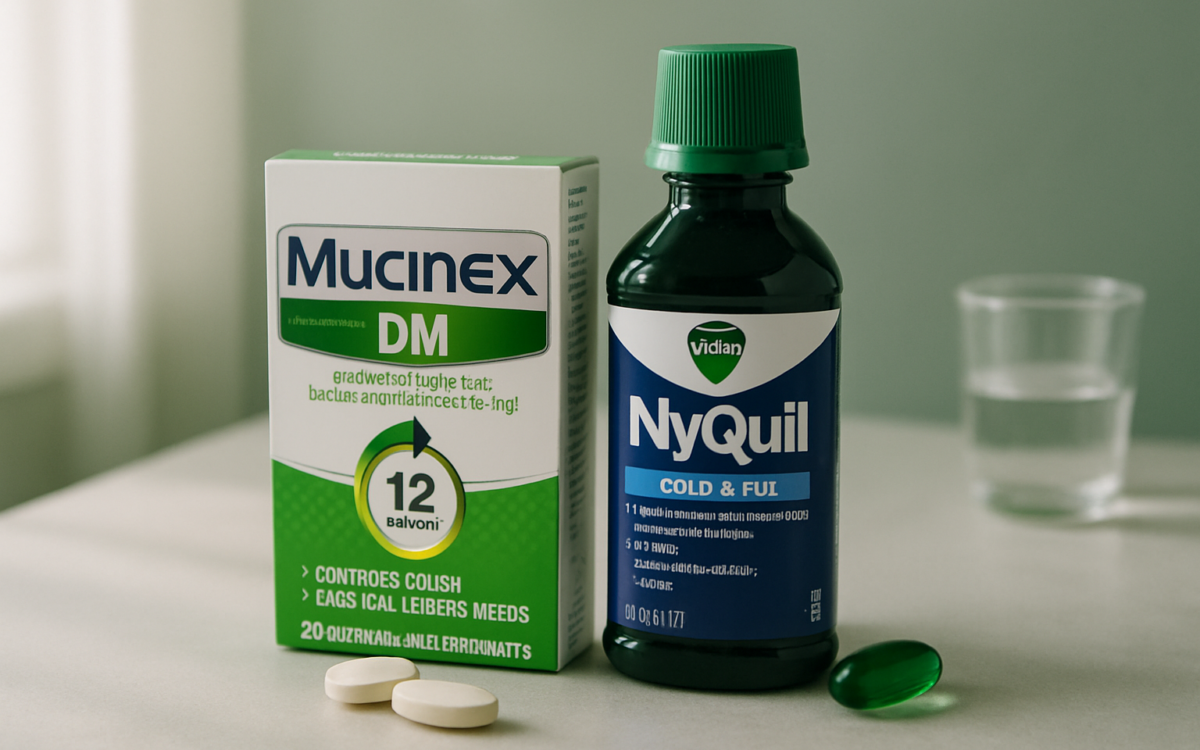
When you’re battling a cold, it can be tempting to reach for multiple medications to alleviate symptoms. Mucinex and NyQuil are popular options, but many people wonder: can you take them together? Understanding these medications and how they work is essential for your safety and health.
What is Mucinex?
Mucinex is an over-the-counter medication primarily used to relieve chest congestion caused by colds, infections, or allergies. The active ingredient, guaifenesin, is an expectorant. This means it helps thin mucus in the airways, making it easier to cough up. Mucinex is available in various forms, including tablets, liquids, and extended-release versions.
What is NyQuil?
NyQuil is a popular nighttime cold and flu relief medication. It typically combines several active ingredients that target different symptoms: acetaminophen for pain and fever, dextromethorphan for cough suppression, and diphenhydramine (in some formulations) for allergy relief and as a sleep aid. Because of its sedative properties, NyQuil is often recommended for use at bedtime.
Can You Take Mucinex and NyQuil Together?
While it may be safe for some people to take Mucinex and NyQuil together, it’s essential to be cautious. Both medications address different symptoms, and taking them together can amplify effects and potential side effects. Mucinex works to relieve congestion, while NyQuil targets cough and promotes sleep.
The primary concern arises from the ingredients in NyQuil. Some formulations contain dextromethorphan, which is used to suppress cough. If you are using Mucinex to help with mucus clearance, combining it with a cough suppressant could potentially interfere with your body’s natural defense mechanism. Always read labels carefully and consult your healthcare provider if you’re unsure.
Potential Side Effects
Combining medications can increase the risk of side effects. Here are some common ones associated with both Mucinex and NyQuil:
- Drowsiness: NyQuil contains ingredients that can make you feel sleepy or drowsy. If you take Mucinex in conjunction with NyQuil, you might experience heightened drowsiness.
- Mucus build-up: As mentioned earlier, using a cough suppressant like dextromethorphan while on Mucinex may lead to increased mucus retention.
- Overdose risks: Be especially cautious about the maximum dosage of each medication. Taking both could lead to unintentional overdose, particularly with acetaminophen found in NyQuil, which can damage the liver in high doses.
Considerations Before Combining Medications
Before deciding to take Mucinex and NyQuil together, consider the following factors:
- Current Medications: Always inform your doctor about any medications you are currently taking, including over-the-counter products.
- Existing Health Conditions: Certain health conditions, such as asthma or chronic obstructive pulmonary disease (COPD), may affect how you react to these medications.
- Ages and Weight: Dosage recommendations can differ based on age and weight. Be especially cautious for children and elderly patients.
Alternatives to Consider
If you’re wary of combining Mucinex and NyQuil, there are alternative symptom relief strategies:
- Stay Hydrated: Drinking plenty of fluids can help thin mucus and ease cough.
- Use a Humidifier: Keeping the air moist can aid in relieving congestion.
- Over-the-Counter Single-Ingredient Medications: Consider taking medications that target specific symptoms rather than combined formulations.
When to See a Doctor
If your symptoms persist for more than a few days or worsen, it’s essential to consult a healthcare provider. You should also seek medical attention if you experience:
- Shortness of breath or difficulty breathing
- High fever (over 101.5°F or 38.6°C) that lasts more than three days
- Severe headache or facial pain
- Symptoms of an allergic reaction, such as rash, swelling, or difficulty breathing
Conclusion
In summary, while it may be possible to take Mucinex and NyQuil together, there are several risks and considerations to weigh. Always consult with your healthcare provider before combining medications to ensure safe and effective treatment of your symptoms. Understanding the active ingredients and their effects is crucial to making informed choices about your health. Always err on the side of caution when mixing medications, and prioritize your well-being.
