
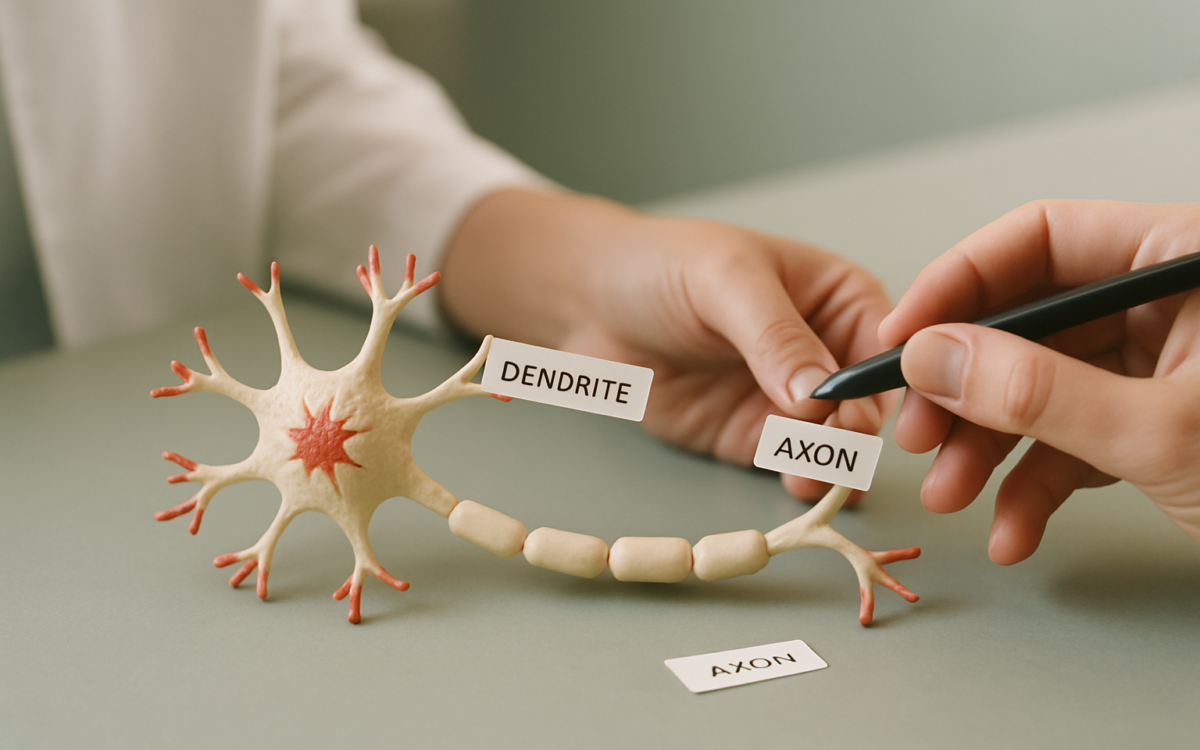
The human brain, a complex and remarkable organ, is primarily composed of neurons. These nerve cells are essential for transmitting signals throughout the body and play a crucial role in our daily functioning, from simple reflexes to complex thoughts. In this article, we will explore the anatomy of neurons, their distinct types, and their functions, shedding light on how these cells contribute to our overall health.
What is a Neuron?
A neuron is an electrically excitable cell that processes and transmits information through electrical and chemical signals. Neurons are the fundamental building blocks of the nervous system, which consists of the brain, spinal cord, and peripheral nerves. Each neuron consists of three main parts:
- Cell Body (Soma): Contains the nucleus and organelles, supporting the neuron’s metabolic activities.
- Dendrites: Branch-like structures that receive signals from other neurons, allowing for communication.
- Axon: A long projection that transmits signals away from the cell body to other neurons, muscles, or glands.
Types of Neurons
Neurons can be classified based on their functions and location in the nervous system. The three primary types of neurons include:
- Motor Neurons: These neurons carry signals from the brain and spinal cord to muscles, enabling movement.
- Sensory Neurons: They transmit sensory information from sensory receptors to the central nervous system (CNS), allowing us to perceive our environment.
- Interneurons: These neurons act as connectors between sensory and motor neurons, playing a critical role in reflexes and complex behaviors.
The Anatomy of a Neuron
To better understand how neurons function, it’s helpful to look at a labeled diagram of a neuron. The diagram illustrates the different parts we discussed earlier. You can think of a neuron as a complex communication tool: the dendrites receive incoming messages, the cell body processes them, and the axon sends out responses.

The connections between neurons, known as synapses, are pivotal for communication within the nervous system. When a signal travels along an axon, it reaches the synapse, where neurotransmitters are released to transmit the signal to the next neuron.
Neurons in Action
Neurons are vital for everything we do. From blinking your eyes to solving math problems, neurons are at work. Let’s look at a few examples of how neurons function in various systems:
Reflex Actions
Reflex actions, like quickly pulling your hand away from a hot stove, involve a simple neural pathway. In this scenario, sensory neurons transmit the signal of pain to the spinal cord, and interneurons immediately relay the message to motor neurons, which trigger the muscle response.
Complex Thought Processes
In contrast, complex thought processes involve networks of interconnected neurons within the brain. The brain’s ability to form memories, make decisions, and navigate social interactions relies on the diverse connections among neurons, which can adapt over time—a phenomenon known as neuroplasticity.
International Treatments and Neuron Research
Recently, advancements in medical research have opened up new avenues for treating neurological conditions. For example, centers such as acibademinternational.com focus on offering international patients access to advanced treatments for brain and nerve conditions, emphasizing the global collaboration in understanding and healing issues related to neuron function.
Common Neurological Conditions
Understanding how neurons work helps us grasp the effects of various neurological conditions that can disrupt their function. Some common conditions include:
- Parkinson’s Disease: This disorder results from the degeneration of dopamine-producing neurons, affecting movement.
- Multiple Sclerosis (MS): MS occurs when the immune system attacks the protective covering of neurons, leading to a range of symptoms from muscle weakness to visual disturbances.
- Alzheimer’s Disease: Characterized by memory loss and cognitive decline, Alzheimer’s affects neuronal communication significantly, leading to brain atrophy.
When to See a Doctor
If you experience any persistent neurological symptoms such as numbness, weakness, coordination problems, or memory loss, consult a healthcare provider. Early diagnosis can help identify potential issues related to neuron health and function.
Conclusion
Neurons play a fundamental role in our health and functioning, influencing everything from our ability to move to our capacity to think and feel. By understanding their anatomy and how they operate, we can better appreciate the complexity of our bodies, the impact of neurological disorders, and the importance of seeking appropriate care when needed.
