
Steri Strips are small, adhesive strips used to help close wounds and promote healing. They are often a go-to choice for minor cuts and surgical incisions due to their convenience and effectiveness. But how do they work, and when should you use them? In this article, we’ll explore everything you need to know about Steri Strips, offering insights into their application, best practices, and more.
What Are Steri Strips?
Steri Strips, also known as surgical tape or adhesive skin closures, are designed to hold the edges of a wound together without the need for stitches. They are typically made of a breathable material that allows skin to heal while still providing the necessary support. These strips come in various sizes and shapes to accommodate different types of wounds.
When Are Steri Strips Used?
Steri Strips are most commonly used in the following situations:
- Minor cuts and lacerations: For small cuts that don’t require stitches, Steri Strips can help keep the wound clean and together as it heals.
- Surgical incisions: After certain surgeries, Steri Strips may be applied to support the incision site during the initial healing period.
- Injuries with low tension: When the skin edges don’t pull apart, Steri Strips can serve as a safer alternative to stitches.
How to Properly Apply Steri Strips
Applying Steri Strips correctly is crucial for maximizing their effectiveness. Here’s a step-by-step guide:
- Clean the wound: Start by gently washing your hands and the wound area with soap and water, then pat it dry.
- Inspect the wound: Make sure the edges are clean and free from debris. If there are any signs of infection (such as pus or redness), consult your doctor.
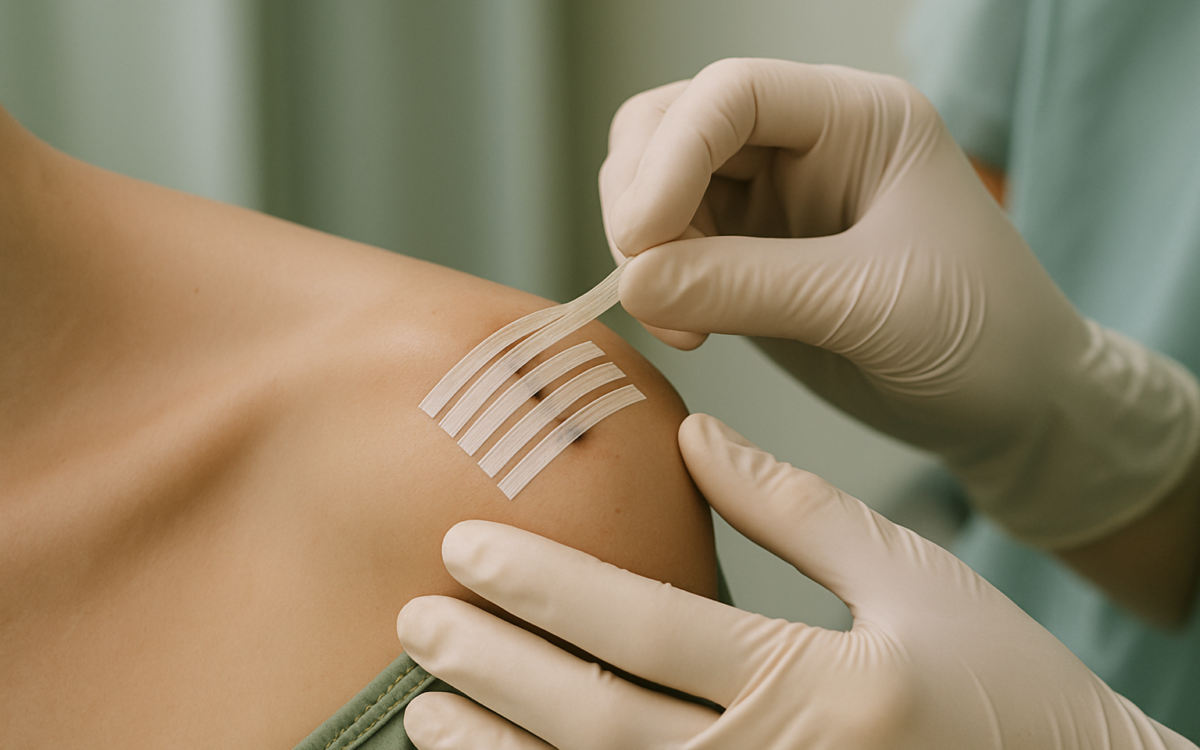
- Apply the Steri Strips: Start on one side of the wound. Place the first strip down at an angle, then gently pull the skin edges together as you lay the strip across the wound. Repeat this process, leaving a small gap between each strip.
- Secure the strips: Make sure the strips are pressed down firmly but not so tight that they cause discomfort.
- Monitor the wound: Change the dressing as needed, typically every few days, and keep an eye on the healing process.
Tips for Care and Healing
For optimal healing while using Steri Strips, consider the following tips:
- Avoid moisture: Moisture can weaken the adhesive. Keep the area dry, and avoid soaking the wound in water.
- Limit movement: Try to minimize movement in the area where the Steri Strips are applied. This can help keep the edges aligned.
- Keep it clean: Regularly check the wound and clean around the strips gently to prevent infection.
- Be cautious with ointments: Using topical antibiotics can sometimes interfere with the adhesive. Consult a healthcare professional for specific advice.
International Considerations for Wound Care
Whether at home or traveling abroad, understanding how to effectively manage wounds with Steri Strips is valuable. Healthcare practices can vary significantly across regions. For individuals seeking treatment internationally, facilities like Acibadem International offer advanced wound care options and resources. It’s essential to familiarize yourself with local healthcare customs and availability of supplies when managing injuries abroad.
When to See a Doctor
While Steri Strips are effective for minor wounds, there are instances when professional medical help is necessary. Consult your doctor if:
- The wound shows signs of infection (redness, swelling, heat, or pus).
- The wound is deep, wide, or continues to bleed after applying pressure.
- You are unsure if Steri Strips are appropriate for your specific injury.
Conclusion
Steri Strips can be a handy tool for minor wound care, promoting healing while providing support and protection. Understanding how to use them properly can lead to more effective care of your injuries. If you’re ever in doubt about your wound treatment, remember to consult a healthcare professional for guidance. Together, you can make the best decisions for your health and recovery.
