
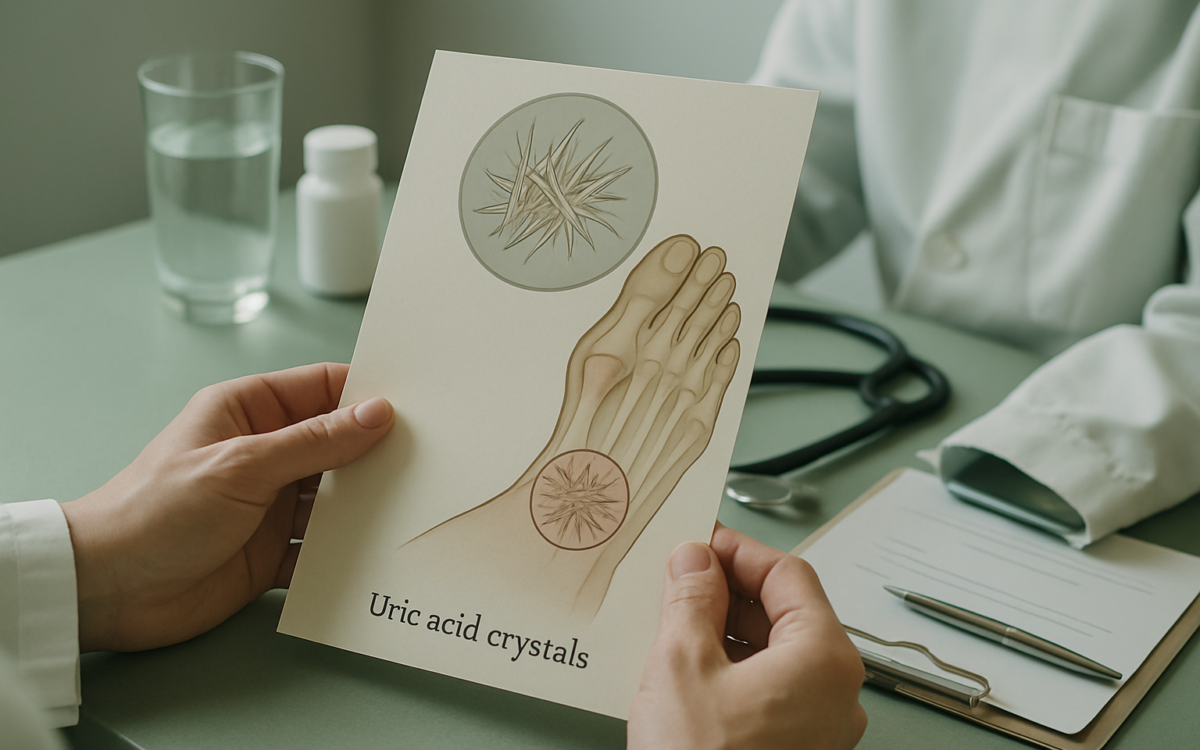
Uric acid is a natural waste product that is produced when the body breaks down purines, substances found in certain foods and drinks. While having some uric acid is normal, an excess can lead to the formation of sharp, needle-like crystals in the joints and tissues, causing pain and inflammation. This article delves into what uric acid crystals are, why they form, their related health conditions, and options for management.
What Are Uric Acid Crystals?
Uric acid crystals are tiny, hard deposits that develop when uric acid levels in the blood become too high. This condition is known as hyperuricemia. When the uric acid concentration exceeds its solubility limit, it can crystallize and deposit in joints, leading to a painful form of arthritis known as gout. These crystals can also accumulate in tissues and lead to kidney stones.
What Causes Uric Acid Crystal Buildup?
A variety of factors contribute to increased uric acid levels and subsequent crystal formation:
- Diet: Foods high in purines, such as red meat, shellfish, and sugary drinks, can elevate uric acid levels.
- Obesity: Extra body weight can increase uric acid production and decrease its excretion.
- Dehydration: Not drinking enough fluids can lead to higher concentrations of uric acid in the blood.
- Medications: Certain drugs, like diuretics, can raise uric acid levels.
- Genetics: A family history of gout can increase your risk.
Symptoms of Uric Acid Crystals
When uric acid crystals form, they can cause several symptoms, especially during a gout attack. Common signs include:
- Severe pain in the affected joint, often the big toe.
- Swelling and inflammation in the joint area.
- Redness and warmth around the joint.
- Difficulty moving the affected joint.
These symptoms can come on suddenly and can be very intense, often waking people from sleep. In some cases, people may have elevated uric acid levels without symptoms, known as asymptomatic hyperuricemia.
Managing Uric Acid Levels: Prevention and Treatment
Managing uric acid levels can significantly reduce the risk of developing painful crystals. Some strategies include:
Dietary Changes
Adjusting your diet can play a crucial role in lowering uric acid levels. Consider the following:
- Limit high-purine foods like organ meats, game meats, and certain seafood.
- Reduce consumption of sugary beverages and food rich in fructose.
- Increase your intake of fruits, vegetables, whole grains, and low-fat dairy products.
Hydration
Staying well-hydrated helps your kidneys filter out uric acid effectively. Aim for at least 8-10 glasses of water a day, and consider reducing alcohol intake, which can contribute to dehydration and elevate uric acid levels.
Medications
If lifestyle changes are not enough, your doctor may prescribe medications to lower uric acid levels or relieve symptoms. Regular monitoring of uric acid levels can guide therapy effectively.
Alternative Treatments
International treatment options like treatment in Turkey provide innovative therapies for managing conditions involving uric acid crystals. Patients seeking holistic or newer methods may find various clinics abroad that specialize in gout and related disorders, often combining dietary counseling with advanced medical treatments.
Living with Uric Acid Crystals
For those diagnosed with gout or at risk of developing uric acid crystals, lifestyle modifications are vital. Maintaining a healthy weight, adhering to a balanced diet, and regular check-ups with your healthcare provider can all contribute to effective management. Additionally, understanding when symptoms signal a more serious issue can help prevent complications associated with untreated conditions.
When to See a Doctor
If you experience sudden, severe joint pain, especially if it affects your big toe or ankle, it’s crucial to consult a doctor immediately. Get medical attention if you suspect gout, experience recurring joint pain, or have difficulty urinating, which could indicate the formation of kidney stones.
Conclusion
Uric acid crystals can be a painful reality for many, but understanding their causes and management strategies can empower you to live well. By making informed choices about your diet and lifestyle and staying in touch with your healthcare provider, you can significantly reduce your risk of gout attacks and enjoy a more comfortable life.
